
Introduction
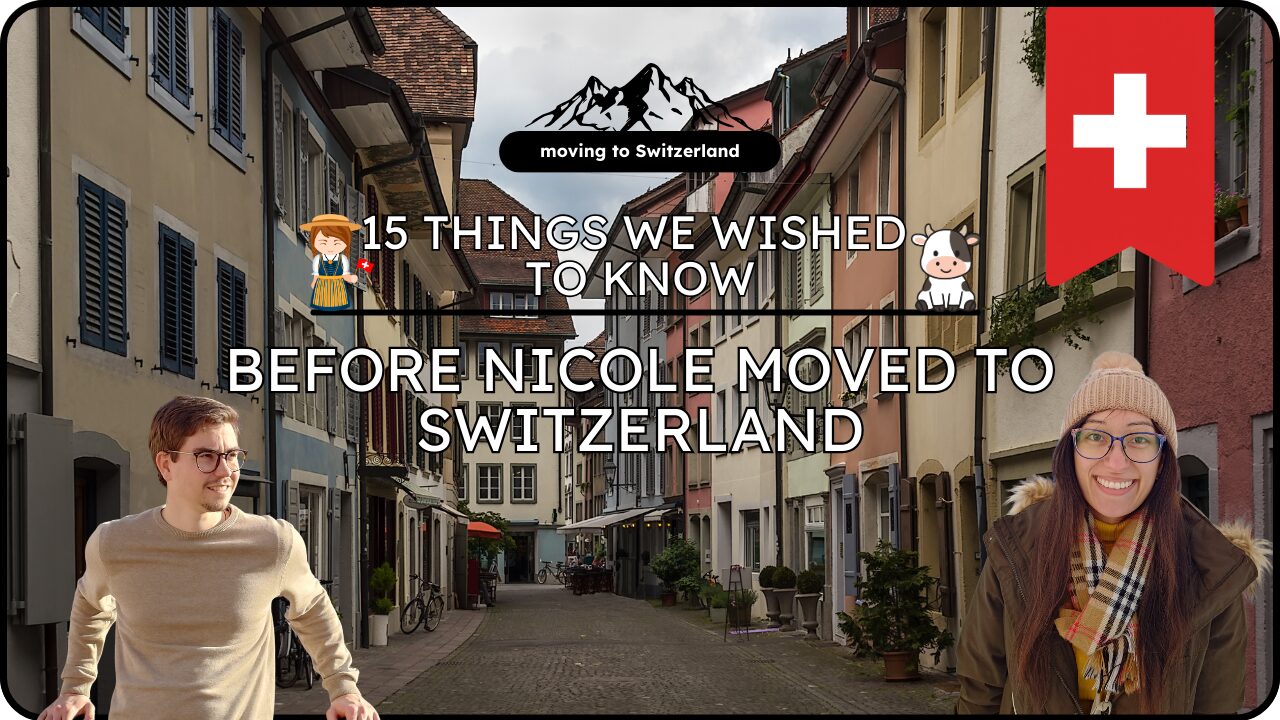
If I could go back and talk to myself a year ago, before Nicole boarded that one way flight from San José to Zurich, I’d sit us both down and tell us these 15 things. Not to scare us off, but to actually prepare us for what was coming.
We read the blogs. We did the research. We thought we were ready. And we were still blindsided by so much of this first year.
This post is for anyone planning a similar move. For partners preparing to relocate internationally. For people who think “love conquers all” is enough (spoiler: it’s not, but it helps). These are the things Nicole wishes she’d known before leaving everything behind.

The 15 Things We Wish We’d Known
1. The Job Search Will Be Harder Than You Think (Even When You Think It’ll Be Hard)
“One of those things I would love to know better before I came here is that it would not be that easy to get a full time job,” Nicole says. “Or something that I would love to do.”
We knew it would be challenging. I told Nicole it would be tough. But knowing it intellectually and living through months of daily rejections are completely different things.
Nicole had nine years of work experience in marketing and advertising. She had certifications, a strong resume, solid references. None of it mattered as much as we thought it would.
“I didn’t do financial stuff even in my country,” she explains. “I’m not the best in numbers because my career is on the other side. It’s totally about marketing and advertisement.”
Yet that’s where she ended up working, out of necessity, not choice.
The reality: Even with experience and qualifications, expect 6 to 12 months minimum. The Swiss job market heavily favors locals and requires patience most people don’t anticipate.
2. The Language Barrier Is Actually TWO Languages
“For me, I thought that being here would be easier. Like, oh, for sure, I’m going to speak the language so fluently,” Nicole remembers. “And it’s still not.”
Here’s what nobody tells you: German lessons don’t prepare you for Swiss German. They’re different enough that Nicole, after a year, still feels like she’s speaking “like a baby. I only say one word and that’s it.”
But there are small victories. Like when she asked if a train seat was reserved using just “Reserviert?” and the guy understood. Progress, but slow.
The reality: Budget 18 to 24 months to feel somewhat comfortable. And accept that you’ll be functionally limited in expressing complex thoughts for a long time.
3. The Bureaucracy Will Test Your Patience (And Your Relationship)
“I never expected that there is so much following of the stuff,” I admit. “This administrative work, this bureaucracy. I was just like, why?”
We thought once Nicole arrived, the hard part was over. Wrong. The paperwork continued for months.
Insurance registration. Commune registration. Getting her Swiss ID. Her passport (which required a trip to Bern). More insurance for this. Different insurance for that. Every office sending us to a different office.
“We went there, they said no, you have to go to a different place,” I explain. “Then we went to a different place, they said no, we have to go back to the other place.”
Even the local commune officials in our town didn’t know the process for Nicole’s situation. “They didn’t even know about the processes. They didn’t know,” Nicole says, still frustrated by the memory.
For weeks, Nicole felt like she was undocumented despite being married and legal. “I always felt like someone without an ID. For so long. It took like a month or two.”
The reality: Prepare for 4 to 6 months of ongoing administrative tasks. Keep copies of everything. Ask the same question to multiple people because you’ll get different answers. And yes, it’s as frustrating as it sounds.
4. Swiss People Won’t Become Your Friends Immediately
“Swiss people sometimes are not that super open minded,” Nicole observes carefully. “Not everyone, but they are not that like, oh, now we are friends from the first day that we met.”
In Costa Rica, friendliness is immediate. People chat in lines, strangers become friends quickly, there’s warmth everywhere. Switzerland? Not so much.
It’s not that Swiss people are unfriendly. They’re just… reserved. Private. It takes time to build trust and friendship, and Nicole wasn’t prepared for how isolating that would feel.
The reality: Real friendships take 6 to 12 months minimum. Join clubs, take classes, put yourself out there repeatedly. And don’t take the initial coldness personally.
5. Homesickness Doesn’t Go Away (It Just Changes Shape)
“It’s like a wound,” Nicole explains. “It’s so bad that it hurts so much. But when time passes, then that wound is not that huge. But still there.”
We thought homesickness would be worst in the first month and then fade. That’s not how it works. It comes in waves, often triggered by things you don’t expect.
December was especially brutal for Nicole. Her second Christmas in Switzerland. “December for us in Costa Rica is so important. We can be with our family, making a lot of food. Enjoying time. For me, it was super hard.”
The wound heals, but the scar remains. Nicole still misses her family. She still video calls her parents and best friend regularly, staying connected to her Costa Rican life while building a Swiss one.
“Some people just say, oh, no, I’m in a new country, new life. And they just forget about all the important people,” Nicole says. “But if I don’t do that, then one of my sides just disappears.”
The reality: Homesickness is permanent, just manageable. Budget for regular visits back home (expensive but necessary). Stay connected through video calls. Don’t try to become “fully Swiss” at the expense of your original identity.
6. You Have to Let Go of Material Things (More Than You Think)
When Nicole prepared to move, we made a detailed list of everything she wanted to bring. Furniture, clothes, her guitar, her keyboard (she plays piano), books, memories. Everything that made her apartment in Costa Rica feel like home.
Then we got the shipping quote: $5,000 to $6,000 for a container ship.
“It was so expensive. Like, holy… how can you pay like five, six thousand?” Nicole remembers.
The logistics were insane. Ship everything to Italy or Netherlands, then truck it across borders into landlocked Switzerland, pay customs taxes. It was a nightmare.
We ended up taking just four or five suitcases on the plane. Everything else? Left behind or sold.
“I had to leave my guitar and my keyboard,” Nicole says, her voice still a bit sad about it. “We made a deal that we will buy a keyboard here at least. And then a guitar at some point.”
But here’s what Nicole learned: “A good lesson when you move to another country is that you can learn how to be detached from physical stuff. If someone passed away and you have the hoodie, okay, that makes sense. But if you’re gonna start a new life, then you should try to start from zero.”
The reality: You’ll leave behind 80% of your possessions. Make peace with it early. Keep only what’s truly irreplaceable (photos, special mementos). Everything else can be replaced, even if it hurts.
7. The Apartment Won’t Feel Like Home Immediately
When Nicole first arrived, our apartment was… not ready. I had a bed. A desk. And that was basically it.
“I remember you didn’t have lights. Everything was so dark,” Nicole recalls. “In the living room, there was no even sofa to sit. Or the table in the kitchen. I was like, how the hell does he eat?”
In my defense, I was eating at my office desk. And I had a reason for not furnishing the place completely.
“I wanted that we can buy the stuff together,” I explain. “So it feels like our home and not only my home when everything is already perfectly here.”
But looking back? Maybe at least get some lights.
Nicole came from a house in Costa Rica with high ceilings, lots of windows, natural light everywhere. Our Swiss apartment felt dark, small, closed in. It took weeks to make it feel like “ours” instead of “his place she moved into.”
The reality: If you’re the one already living somewhere, prepare the basics (lights, a table to eat at, some comfort). If you’re the one moving, give it time. It’ll feel like home eventually, but not immediately.
8. The First Few Months Are Survival Mode (That’s Normal)
“The first three months, you are so excited because it’s a new culture,” Nicole explains. “You feel like you can start your life again. All your dreams are gonna come true. Soon you’re gonna get a job. Soon you’re gonna learn the language so easy.”
Then reality hits.
“When you pass the three months, then it’s like a roller coaster of emotions. You end up in depression. You end up going crazy.”
We keep calling this the “survival mode” phase. Everything is new, everything is hard, you’re exhausted from constantly adapting, and nothing is working out like you hoped.
Nicole spent those months applying to jobs daily with no results. Watching her savings disappear. Feeling her independence vanish. Struggling with the language. Missing her family. All while trying to adjust to a new country, a new climate, a new life.
“For me, I don’t know, there was nothing that could have helped me in that moment,” Nicole admits. Not more furniture, not more support, not anything tangible. It just takes time.
The reality: Months 3 to 6 are brutal. Expect depression, anxiety, identity crisis. It’s not a sign you made the wrong choice. It’s just part of the process. Therapy helps. Patience helps. Knowing it’s temporary helps most.
9. You’ll Need Something Emotionally Grounding (That’s Not Your Partner)
“Maybe something that would have helped me would be to have a cat to play with,” Nicole says. “Because maybe that could help me a lot in the mental side.”
Nicole had to leave her two cats in Costa Rica. It was one of the hardest decisions she made. The cost to bring them was high, they’d have to be in quarantine for a week, and our apartment doesn’t even allow pets anyway.
But losing that emotional anchor hurt more than she expected.
“For me, my cats are super important in the mental part. To make me feel like thinking about other stuff instead of thinking, oh, I miss so much my family.”
Music became her substitute. We bought her a keyboard so she could play piano again. Eventually we’ll get her a guitar. It helps, but it’s not the same.
The reality: You need something that grounds you emotionally that isn’t your partner. A hobby, a pet (if possible), music, art, sports, whatever. Your partner can’t be your only source of comfort, it’s too much pressure on both of you.
10. Your Career Will Take a Hit (Probably a Big One)
Nicole worked in marketing and advertising for nine years in Costa Rica. She was good at it. She enjoyed it. She built a career she was proud of.
Then she moved to Switzerland and ended up doing financial work she never wanted to do.
“You have to be very patient with the job hunt,” Nicole advises. “And if you get an opportunity, take it. You can’t say, I have this title, so I won’t work there. You have to give it your all.”
She’s not working in her dream field. She’s not using her degree. She’s working contract jobs, not permanent positions. It’s frustrating and humbling.
But it’s also temporary. The goal is to get a foot in the door, prove yourself, learn the language better, make connections. Then, maybe in a year or two, transition back toward what she actually wants to do.
The reality: Your first job in a new country probably won’t be your dream job. Take what you can get. Build from there. It’s not forever, but it is for now.
11. The Living Together Reality Is Different (Even After Long Distance)
“I was a little bit scared,” Nicole confesses. “We hadn’t lived together for such a long period. I thought, are we really going to be able to handle this? What if we’re not compatible?”
We’d done long distance for years. We’d visited each other, spent weeks together, thought we knew each other well. But living together every single day? That’s different.
“In the beginning it was difficult,” Nicole admits. “But now it’s so much easier. We always see both points of view when we need to decide important stuff. It’s always 50/50.”
The key? Not assuming one person gets to make all the decisions just because it’s “their country” or “their apartment.”
The reality: Even if you’ve been together for years, living together internationally requires new adjustments. Communication becomes even more crucial. And you both have to compromise, constantly.
12. Switzerland Isn’t Perfect (And That’s Okay)
Nicole arrived with certain expectations. Switzerland is clean, organized, efficient, on time. Right?
Well… mostly. But not entirely.
“People always say trains here are always on time,” Nicole laughs. “But for me now, that I’m living here, it’s not that true. I go swimming three days a week and it’s always a mess with the train schedule. They cancel trains way more often now.”
Switzerland is cleaner than San José. The mountains are stunning. The infrastructure is generally excellent. But trains still get delayed. Bureaucrats still don’t have answers. People still aren’t always friendly.
“It’s very clean compared to San José. The mountains are beautiful. But the trains? Yeah, they’re just trains.”
The reality: Don’t romanticize your destination country. It has pros and cons like everywhere else. Manage expectations and you’ll be less disappointed.
13. You’ll Lose Part of Your Identity (And Have to Fight to Keep It)
“You don’t have to change because you’re in another country,” Nicole says firmly. “You have to adjust, obviously. Respect the rules. But you don’t have to lose that Latin part.”
She’s seen it happen. Women who move to Europe for their partners and completely transform themselves. They stop making jokes, lose their cultural flavor, become someone unrecognizable.
Nicole refuses to do that.
“I really don’t want to lose my Costa Rican way of thinking. Everyone will say what they want. But personally, you don’t have to change who you are.”
She’s adapted to Swiss punctuality (mostly). She’s learning the language. She’s respecting the culture. But she’s still fundamentally Tica at her core.
The reality: You will change, whether you want to or not. The question is: how much control do you have over what you keep and what you let go? Actively protect the parts of your identity that matter most.
14. Lawyers and Professional Help Are Worth It
“I recommend 100% to hire a lawyer,” Nicole says. “I know it’s expensive. But if you can, really, hire a lawyer to do all the paperwork.”
We hired a lawyer in Costa Rica to handle Nicole’s side of the paperwork. It cost a fortune (consultations here in Switzerland can be $200 to $250 per hour), but it saved us enormous headaches.
“The lawyer helped me with the whole part of the embassy,” Nicole explains. “He had to ask everywhere here. And paying for a lawyer is too expensive. But it helped a lot.”
Without that help, we would have been completely lost. The bureaucracy is bad enough when you have professional guidance. Without it? Nearly impossible.
The reality: Budget for professional help. Immigration lawyers, tax advisors, whatever you need. It’s expensive but prevents costly mistakes. Consider it an investment in your sanity.
15. It Gets Better, But Different (Not Easier, Just Different)
After a full year, things are better. Nicole has two jobs. She’s learning German. She’s made some connections. She’s rebuilding her confidence and independence.
But it’s not easier, exactly. It’s just different.
“Now I feel more secure of who I am here,” Nicole reflects. “My identity is coming back. But leaving everything behind and building up a new person, you also change a little bit.”
The homesickness is still there. The language is still hard. The job isn’t what she wants yet. But she’s adapted. She’s surviving. She’s building something.
“I have to confess, you end up in depression. But now I feel like I’m coming back.”
That’s the truth of it. It doesn’t become easy. You just become stronger.
The reality: Year one is survival. Year two is building. Year three is maybe thriving. Adjust your timeline and expectations accordingly.
Conclusion: Despite Everything, Worth It
If you asked Nicole right now whether she’d do it again, knowing everything she knows, she’d pause. Think. And then say yes.
Not because it’s been easy. Not because she doesn’t miss Costa Rica desperately. Not because the job market or bureaucracy or language barriers aren’t exactly as brutal as described.
But because she’s building something. Because we’re building something together. Because love, as cliché as it sounds, does help you get through the impossible moments.
Our advice if you’re considering this:
“Don’t believe everything you see on social media,” Nicole urges. “Being a tourist in another country is great. But living in another country? It’s not how you paint it.”
Prepare for the worst, hope for the best, and know that the first year will test everything you think you know about yourself and your relationship.
But if you make it through? You’ll be stronger, closer, and more resilient than you ever imagined.
And that’s worth something. Maybe everything.
Have you moved countries for love? What do you wish someone had told you first? Share your biggest lesson in the comments.