
Life can be incredibly stressful, and often, there’s not much we can do to change external circumstances. However, from our experience, a little bit of structure and organization can significantly reduce that stress. We currently work demanding 9-to-5 jobs, and on top of that, we’re also freelancing, adding about 20% more workload to our already full schedules. This means our weeks are incredibly busy and require meticulous organization to prevent us from going mentally crazy. And believe me, it didn’t always work out in the past! That’s why, at some point, we decided to plan ahead. This led to our Sunday Planning session, a dedicated time each week where we structure our upcoming days to proactively reduce stressful moments.
Every Sunday, we sit down and plan different aspects of our lives for the week ahead, ensuring everything is ready and we’re not caught off guard by unexpected issues. We hope this insight into our routine inspires you to start your own planning, helping you achieve more, stay focused, and feel less stressed.
The Foundation: Our Physical Whiteboard Calendar
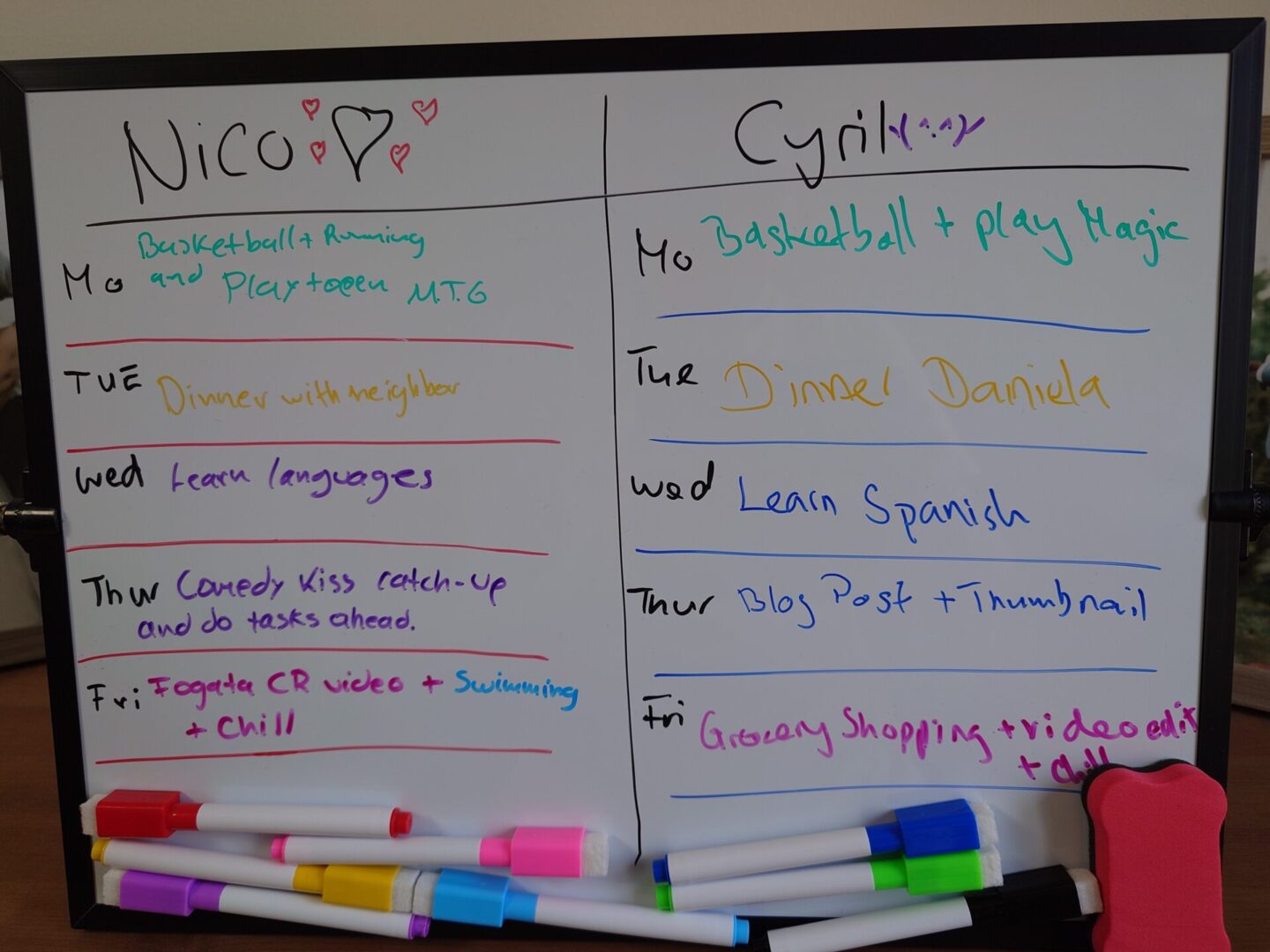
The first thing we do in our Sunday planning session is to clear our physical whiteboard calendar. We made a conscious decision to use a physical calendar because it makes it so much easier to see our entire week at a glance, rather than constantly checking a calendar app on our phones. This also helps us reduce our screen time, which is an added bonus. While we’ve used digital calendars in the past, and they worked fine for me personally before I was in a relationship, we’ve found that as a couple, a physical calendar at home is more convenient and adds a personal touch. Ultimately, the best setup is the one that works best for you, but for us, the whiteboard has been a game-changer.
What We Plan in Our Sunday Session: Key Categories
So, what exactly do we cover in our Sunday planning session? In our opinion, there are a few key areas that need to be addressed to ensure a smooth and productive week. Here’s our list:
1. Appointments
The first thing we check is any upcoming appointments for the week. This includes anything with a specific schedule and timing, like a doctor’s appointment, family meetups, or dinner after work with friends – basically, any fixed appointments that cannot be easily rescheduled. Once we have all these appointments gathered, we write them into our calendar.
2. Sports / Exercise
We always try to incorporate regular exercise into our week. Nicole typically goes swimming three times a week, and I also try to fit in some sports from time to time. At the moment, I’m still looking for a sport I truly enjoy for my physical health, but I make an effort with running sessions and home workouts to stay in shape, or more accurately, to get back in shape. I’m actively searching for another sport I can do regularly, but it’s still undefined. Regardless, because physical activity is super important for both our physical and mental health, it’s a must-have in our calendar. If it’s in the calendar, it serves as a daily reminder to do some active sports. We usually aim for at least three sessions a week, around an hour each, to balance our office work.
3. Our Own Projects
This next part is, for us, probably one of the most important: Our own projects. We both have personal projects we’re passionate about. For me, it’s my blog and other ventures that might come up over time. For Nicole, it’s her Costa Rica Travel app, which will actually be available soon (so if you want to travel to Costa Rica, stay tuned for the app!).
We love working on our projects on a weekly basis to ensure we make progress and can actually realize them, or at least move them forward. Depending on the week, this could involve a lot of work or just a little bit, as it really depends on our other responsibilities. But for us, it’s essential that we dedicate time to our projects and put them into our weekly calendar. Our ultimate goal is for one of our projects to become successful and help us shape a new life, free from working for a random company.
4. Food & Dinner
We try to cook for ourselves every day and always do enough so we can take our own lunch to work the next day. This means we typically cook four portions per day, which requires some planning to avoid wasting time running to the grocery store for missing ingredients. That’s why we usually have a meal plan for the week, at least from Monday to Friday.
Cooking needs time and planning, and with this foresight, we can ensure we know what we’re going to cook and that we have all the necessary ingredients at home. Of course, sometimes we don’t feel like eating what we planned, but then we can easily cook something else with the ingredients we already have. We usually do our weekly grocery shopping on Saturday. The planning for food and dinner isn’t typically on our physical planner, but we always discuss it together to ensure we both like our culinary plan for the week.
The Art of Flexibility: Plans are Guidelines, Not Fixed Rules
These are the essential items that must be on our calendar, without any doubt. Sometimes it’s full, sometimes it has some space. We also try to fill the calendar based on how we feel. It’s crucial to have some empty space in our calendar. We don’t want our calendar to be so full that it overwhelms us and breaks our mental well-being. It’s important to talk with each other throughout the week, because while it’s nice to have a plan, it’s not worth forcing something when it’s not working out – and that’s perfectly okay. Just because for one week not everything goes as planned doesn’t mean we’ve screwed up.
It’s important to listen to our health and to decide, even on a daily basis, if we can actually do what we planned or if we need to adjust our calendar. It’s a guideline, not a fixed rule. It should help us stay on track, but it should be flexible enough for adjustments. That’s why having it on a whiteboard is so useful – we can just wipe things away and adjust the planning. That’s why it’s called a plan, and plans can be adjusted, adapted, completely overruled, or entirely rewritten.
Your Journey to a Less Stressed, More Productive Week Starts Now!
We hope this gave you a small insight into our Sunday planning session and how we structure our week to reduce stress, feel more motivated, and feel more empowered to reach our goals and actually be able to do what we want. However, keep in mind: if you also create a plan for your week, it should always be flexible enough to adjust to your feelings. Your mental and physical health is more important than forcing a plan. Just remember to go back to the plan as soon as you feel ready again. And just because you don’t want to do something doesn’t mean you shouldn’t do it. Sometimes we have to force ourselves to actually do the stuff. These days, there’s a lot of distraction, and we should be aware of it and make sure we don’t lose track of our planning because of those negative influences of distraction.
With that said, we hope you can get your own Sunday weekly planning session going. We also hope that it helps you reduce some stress, gives you more structure in your week, and allows you to actually be able to do what you planned. What are your favorite planning tips, or what’s your biggest challenge in organizing your week? Share your thoughts in the comments below!